Tuesday, March 8, 2011

A Plane Makers Dream, Billet of Macassar Ebony

I participated in the Altanta Lie-Nielsen Hand Tool Event February 18th and 19th at Peach State Lumber in Kennesaw, Georgia. This was a great opportunity to reconnect with some good friends from that area and see the good people from Lie-Nielsen Toolworks, my friend Deneb included. Steve Qhuel, owner of the local Woodcraft Franchise invited me to display and demo my planes on a beautiful ash Roubo bench made for him by my good friend Jameel Abraham. I just could not pass up that opportunity.

Some weeks prior to this event I received a phone call from a gentleman named John Fiant. John runs a custom woodworking/millwork business in the Marietta area of Atlanta. We conversed about several aspects of tools, tool making and many woodworking related topics. As the conversation ended we agreed that the Lie-Nielsen Event would be a great place to meet in person and continue our discussion.

John introduced himself to me at the event and as our conversation continued he inquired as to whether I would be interest in a piece of Macassar Ebony that he had in his possession. As he began to describe the piece to me I had to work at controlling my excitement. I certainly did not want to give away my bargaining position by seeming overly interested. The truth of the matter was just this....if the wood was as he described, I by all means wanted it and I told him so. So much for my bargaining position.

This billet measures 5" thick 6.5" wide and is 52" long. The moisture content measured 6.2% on all four sides. Truly a magnificent piece of very dense, will sink in water, piece of wood.

As you can see in the pictures some sides contained wonderful tight contrasting stripes and other sides contained contrasting marbling. John delivered this billet to my shop the following Thursday. When he place this piece on my workbench there was only one word to describe my condition......I was GOBSMACKED!! Seriously this was the word that popped into my mind.

A piece of wood of this nature doesn't come along everyday and I really was interested to know more about it's origins. I consulted with a friend that handles rare woods in the Atlanta area and he stated that he knew of some billets of Macassar Ebony of this description that had originated from a dealer on the west coast and was fairly sure this was some of that same material. This would put this piece of ebony as having been drying for 15 to 20 years.

By the time John departed for home I was the new owner of this wonderful piece of wood and of course my wallet was much lighter as a result. I was also in more trouble as well. When I consulted with the dealer in Atlanta he informed me that he had stumbled onto another log segment of the now famed "Picasso Rosewood". As luck would have it my wife Julie was flying to New York the next day to attend my Grandson's 1st birthday party. After I dropped her off at the airport I stopped by my local wood pusher, I mean dealer's place of business and entered into negotiations for the rosewood log. I returned home with the log segment rolling around in the trunk of my car like a bound and gagged kidnap victim.

It's been an expensive week to be a plane maker in this part of the world, but I'm thrilled to have this material.

While conversing with one of my customers on the phone the next day I mentioned this piece of wonderfully striped and marbled Macassar Ebony. He asked to me to send a picture. Negotiations of a different type ensued and when all was said and done it was agreed that I would be making a matched set of planes using the Macassar Ebony material.

A matched set of planes will be a new adventure for me and it goes right along with the adventure and the opportunity of acquiring exceptional wood. This piece of Ebony is so pristine in it's present form that it almost seems a shame to cut it up into pieces.........but I will!

Did I mention before that........ "I Live for this Stuff!"

Yeah, I guess I did. (Grin)

Ron

Friday, February 25, 2011

Shaping an Ebony Tote, or, Have you been Cleaning Out the Fireplace Again?


Obviously the rear tote is the first thing your hand touches when you pick up a plane and you will either immediately like the tool or you'll be indifferent about it. There's an old saying "you never get a second chance to make a first impression" and this holds very true to the rear tote of a hand plane. This is also the area in which you get all the feedback that the plane offers while in use. For this reason I spend an inordinate amount of time in the shaping the totes on my planes.

There are basically two types of totes. Closed totes and open totes. Open totes tend to be more upright and this makes sense because they are unsupported and need the more upright configuration to maintain structural integrity. The shape of a closed tote can be enhanced because it supports itself and this allows a more forward leaning shape that most find much more comfortable and inviting. In order to close the gap between iron and tote the even steeper pitched planes have an even more forward leaning shape and I find them the most comfortable.

I started first thing one morning with the tote already in the shape shown in the photo below. Roughly shaped, all the features that fit it to the plane body already in place, some of the areas rounded over. This particular tote will be part of a 132-50P stainless steel panel plane. I will use three tools to form the details of the shape I want to achieve. I start with an extremely sharp 1/2" chisel, you have to start sharp because it won't stay that way long while working ebony, a fairly course rasp, and a fine cabinet makers rasp. Both rasp are flat on one side and rounded on the other. This is critical for obvious reasons. You'll need to refresh the edge on the chisel several times during this process. When the chisel starts pulling out pieces instead of shearing it's time to hone.

I begin by blending the transitions from the rounded areas to the areas that remain somewhat flatter and I find that I can remove material much quicker at this stage of the process with the chisel.

As you start approaching the desired preliminary shape take lighter cuts with the chisel. This will allow you to refine the larger flat facets of the chisel cuts and make the shape much fairer.

Also note that I'm using the chisel with the bevel side against the surface I'm cutting. You can gauge the depth of the cut easier this way and it follows the contour. In the picture below you'll see that I'm making the radius of the neck of the stem deeper than it started. Some areas of the tote need to be shaped into a more elongated radius, I'll talk more about that later.

Next I shape the thumbnail at the top of the horn. It starts as shown in the picture below. You need a lot of control here so I do this with the finer of the cabinet makers rasp, and I find that I can achieve much better symmetry in the shape if I just move the rasp from my right to my left hand rather than moving the tote so as to work both sides with my dominant hand. Working left and right handed in some areas is just something you have to teach yourself to do. You'll find that it saves time and your perspective of your work piece doesn't change which is very helpful when trying to achieve a symmetrical shape.

The competed thumbnail shape at the top of the horn.

The process of refinement continues by working with the coarser rasp and continuing with the finer rasp as we approach the final shape. It's hard to show what a rasp really does in pictures so I decided to spare you those details. Below is the completed shape after shaping and sanding. I typically sand up to 600 grit and then use #0000 steel wool to polished the surface even further.

If you examine the picture below thoroughly you see that the radius of the neck has been expanded into a more elongated shape that accepts your hand in this area, almost asking you to hold the plane. The areas at the bottom of the main stem are also shaped into an elongated radius but here is where there are some minor differences.

The neck just under the horn needs to be shaped in a similar manner on both sides of the tote, however the area at the bottom of the stem should be shaped based on the approach of the hand. In other words if the user is right handed then that area will be more elongate on the right side or side of approach, the other side needs to be less elongated so that area of your smallest finger from the joint to the tip has an area to grip. This particular tote was made for a left handed user so it's shaped opposite that description.


Because this tote is for one of my stainless planes I have a little more leeway in the shape at the bottom of the tote. I did not have to work around the confines of the areas where the side pieces attach to the center section as is the case in one of my infills.

The next step is to apply the shellac polish. I apply the first coat as full strength two pound cut shellac which is allowed to dry and then flattened with 400 and 600 grit sandpaper followed by #0000 steel wool. Then I apply several coats of french polish which is subsequently rubbed down with steel wool and then buffed on a soft buffing wheel. This makes it look as satiny as it feels.

As I mentioned early I started first thing in the morning shaping this tote. It did not get the first coat of shellac until later than evening around 7:00 pm. It was a long day, my hands, shirt, pants and everything that was even close to the workbench that day was as black as coal.....and I loved it. If you haven't figured it out by now.....I sort of live for this stuff!


Ron


Wednesday, February 9, 2011

Oh My Aching Back, Legs, Arms, Shoulders, Neck, Etc.

1950's Era Covel surface grinder in the shop of the former owner.

Ironically it sometimes takes machinery to make hand tools to a very high level of fit and finish. Last year I purchased a small 6 x 12 surface grinder. Initially I used this tool to perform the surface grinding on my plane irons when they returned from the heat treating process, but as it usually goes once you have a tool and get acquainted with the way it works you find ways to use it to the best advantage in other areas of your work. This sometimes leads to the pursuit of a tool with increased capacity.

Craig's List has recently met my needs in this area, maybe a little too well. In the case of the 50's era Covel surface grinder that I recently purchased it seems as though it worked out beautifully. A nice piece of old iron, in good shape, at a very good price. When I went to look at this machine I made sure that my good friend and master machinist Johnny Kleso could accompany me for the inspection trip. The ad stated that the machine had been completely disassemble, cleaned, painted and all parts that needed replacement had in fact been replaced. I've traveled to inspect machines in the past in which the ad stated they had been completely refurbished, or were like new, only to arrive and find a machine that had paint over rust.

Johnny and I walked into the sellers shop to find a machine that looked to be nicely refurbished. Of course the spindle is the heart of the surface grinder and if it's not running true then the rest of the machine is not worth much. I switched on the machine, the spindle started up and was whisper quiet. Not so much as a shudder when it started. Cool!

There was however a catch. This machine weighed 1800 pounds and was in a basement with only stairs as the access. The picture below shows the surface grinder partially broken down in the basement of the sellers shop.

A deal was made and I set a date in which to retrieve the machine. The day before I was to fetch the surface grinder my good friend Jameel Abraham was arriving to spend the week, escaping the Iowa winter. As you can probably imagine this was no coincidence. When Jameel left Iowa Sunday morning it was 12 degrees, when he got off the plane in Atlanta that afternoon it was 72 degrees, the sun was shining and the sky was quite blue. Unfortunately the next day it rained and so we postponed the transport of the surface grinder until later in the week. We arrived in Decatur, Ga. Wednesday morning with a bag full of tools, a camera, and a bunch of ziplock bags that would be used to label and package hardware. We disassembled everything that two people could carry away from the grinder and packed those pieces in the truck and then spent a couple of hours putting together a strategy for handling the three heaviest castings. We arrived home that night about 7:30 tired from a long day and we still had the task of unloading the truck.

We estimated the base casting to weigh 600 pounds, the base cap casting about 500 pounds and the spindle column casting maybe 350 pounds. A plan is needed to handle pieces of this magnitude safely, especially with the limited space in which to move these pieces. Things this heavy go down steps much easier than they go up steps.

The next morning we returned and unstacked the castings using a come-a-long hanging from a floor joist in the basement and lowered them onto a heavy caster that we then wheeled out the door. We made a ramp on the steps using a piece of 3/4" plywood. We tugged the pieces up the ramp with the come-a-long that was anchored to the base of a shrub that had been in place over a decade. No shrubs were injured in the moving of this machine, there was however a patch of oregano that took a pretty good beating from the foot traffic.

We wheeled the pieces around the house to the driveway to load them into the truck and that's when it started sleeting. The sleet turned into rain while we were loading the pieces into the truck with the help of an engine hoist. Luckily the areas of raw cast iron were well oiled, you can see the rain beading up on the oil in the picture below.

We were able to get all the parts in the truck, it was still raining and we were cold, tired, sore and wet. We headed home.

When we arrived home the first order of business was to take some Tylenol, the second order of business was to eat the burgers and fries that my wife Julie had waiting on us and the third order of business was to once again pull on our wet, cold gloves and unload the truck. Without the assistance of the young man pictured below using the engine hoist to remove the last piece from the truck, this machine would have not made it to my shop in any reasonable amount of time. Thanks Jameel, I will be forever grateful.

By 10:30 that night all the pieces were unloaded. We dried all the surfaces with paper towels and a hair dryer and applied a new coat of oil to the bare cast iron surfaces.

This picture was taken several days later and shows the machine fully reassembled and in my shop. This machine is truly massive and truly amazing in performance. This old iron thing could get addictive. I keep telling myself, "stay off of Craig's List"," stay off of Craig's list."

When pursuing the acquisition of a machine of this nature it makes all the difference to have the help of knowledgeable people and friends like Johnny Kleso and Jameel Abraham.

"Thanks guys!"


Ron

Tuesday, January 25, 2011

Working Stainless, You Best be on Your Game


Mention stainless steel to most machinists and they look at you like you're some kind of sadist. If it's within your power to choose, why would you subject yourself to this kind of mental and physical abuse? The answer is simple, corrosion resistance. If you remember a couple of posts back I put a piece of 410 stainless on the door step of my shop exposed to the elements just to see if it would prove to be as corrosion resistant as claimed. The piece is still on the steps and for a week it was frozen in a block of ice, courtesy of the unusual winter storm that came thru a couple of weeks ago. The ice melted and the piece looks just as it did the day I put it out for the torture of mother nature.

The stainless does however live up to a reputation for being difficult to work. You'll go thru more tooling than with any other metal and cutting lubrication is an essential key to being successful with this material. Drilling is an area of much concern. You can work harden this material in the bat of an eye and once this occurs your only recovery will be with carbide tooling, however it's really just a better idea to avoid this occurrence. Sometimes it's just not within an acceptable design parameter to remove a few more thousandths with the carbide tooling so working hardening can also mean scrap parts and if this part happens to be a plane side that is match milled to the other side it could mean scrap parts time two. When one considers that precision ground 410 stainless is typically priced three times what you would expect to pay for mild steel....well, it can get expensive real quick. You learn that it's cheaper to pitch the drill bit that you're not really sure about rather than create stainless scrap. The trade off is evident a $4.00 drill bit versus a $135.00 stainless bar.

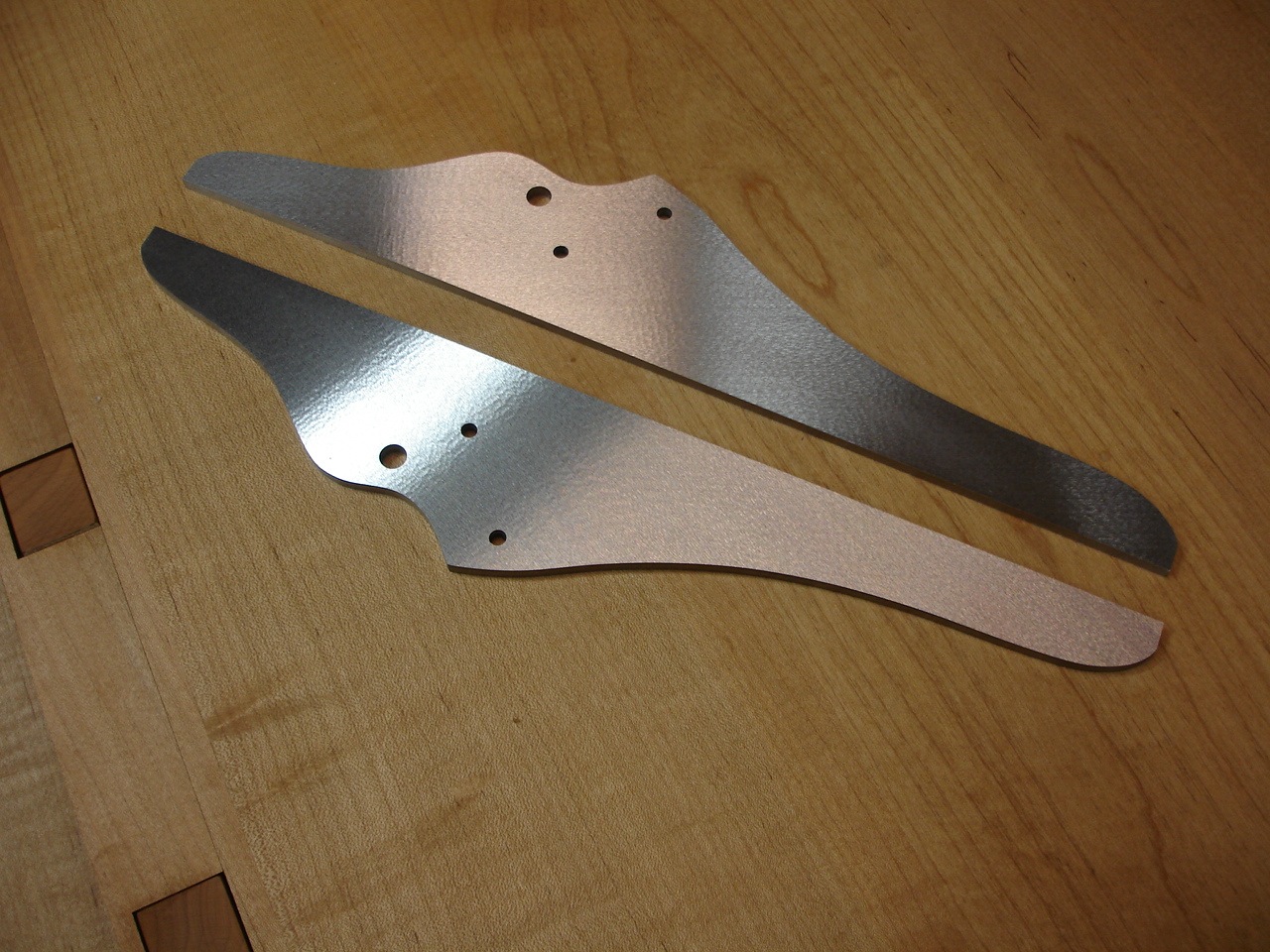
There is also a considerable amount of irony in working 410 stainless. In the photo above you'll see that one of the planes sides has been refined by removing the milling marks from the edge, and the piece in the background awaits this process. 410 stainless is formulated to be" wear resistant" so when you working an edge to remove the milling marks it comes to mind that you are trying to wear material that is "wear resistant." You can't think about this for very long because the idea of it will make you weary. As a comparison, anything that you can do in brass that requires 10 minutes of work will take 1 1/2 to 2 hours in stainless. Once again don't think about this too long or you'll go completely off the idea of corrosion resistance plane bodies.


I will have to say that milling 410 stainless with carbide end mills is a relatively easy task if you provide the cutter plenty of lubrication so it's not difficult in every aspect of fabrication but it will wear tooling at a much higher rate. It is not the easiest material to surface grind. I typically can get parts out of the mill at very close tolerances. It's pretty typical to achieve tolerances of .0005 on the width a plane sole in a length of 14" and that bit of inconsistency (if you would call .0005 an inconsistency) can be removed on the surface grinder if one wishes to do so.

Creating the stainless tweed pattern on the interior surface of the sole requires indicating every part when it is put into the vise and quite frankly what passes as precision ground bar these days usually isn't quite accurate enough to accommodate a milled texture that is only .002 deep in the surface. Therefore these pieces have to be reground here in the shop. The tweed pattern is a math/milling puzzle and attempting to assure that it is perfectly centered on the plane sole can drive a plane maker "round the bend."

The picture below shows the process of milling the tweed pattern, anyone can cut milling patterns in metal but to cut a milling pattern that has a holographic effect and looks like tweed fabric is a different thing altogether. It requires the correct starting point, the proper pitch of the overlap, the correct feed rate and depth of cut.


The picture below features two new additions to the shop. When attempting very precise work in demanding materials accurate working holding is very key. These two Glacern vises are very well made tools and are quite up to the task once they've been accurately set and indicated to the mill spindle and one to the other. I indicated these vise the same day I milled the stainless tweed pattern on two set of plane soles. Somedays you can just wear yourself out with math.

I certainly did not mean to post a gloom and doom of working stainless entry today. But sometimes a little insight into what's required to perform this work is helpful. I do believe the effort is worth the result. The stainless tools have a quality that is quite different in look and feel. The emphasis on very precise work in these tools is important in my effort to consistently create planes of this quality. Of course when all the pieces of a tool fit together quite precisely and solidly you have a plane that when in use.... nothing moves but the shaving. Include an iron with a quite sharp edge and wood fibers just don't have a chance.

My next post should show the final parts required before assembly of the plane body and the body assembled, that is unless I get off on another tangent. It's been know to happen. (grin)

Ron


Sunday, January 9, 2011

Rosewood is Interesting Stuff and Sometimes it Comes with a Story


Rosewood may be the most intriguing wood that I have the opportunity to work. I was lucky enough some years ago to acquire on some very old log segments of this material. Quite honestly I don't really know which category of rosewood this material would be a part of. One of the log segments had markings on it that indicated that it had passed thru the Panama Canal on the trip that ultimately ended at the door of my shop. South America is a big country so this still gave no clue to it's identity. Quite frankly I don't care what kind of Rosewood it is because one thing I do know, it's really dense beautiful material.

The other aspect that I really enjoy when working this wood is that it's very unpredictable. I don't mean that it's not stable, what I'm making reference to is the fact that you can cut infill blanks from a 20" section of this material and the first 10 inches may look completely different than the second 10 inches and the color can vary widely in just this much length. The growth rings aren't nearly as consistent as in most woods and sometimes a swirl occurs in the growth rings.

Let me tell you the story of how I came to acquire this very old and wonderful wood. I was at the annual meeting of the Midwest Tool Collectors Association in Madison, Georgia. This event is called the Peach Meet because of it's location in the Peach growing belt of the Piedmont area of our state. I brought along one of my infill smoothing planes and a gentleman from Athens, GA whose name was ironically "Brent Wood", became quite enamored with the mahogany infilled plane.

The next week Brent sent me an email proposing a trade. He explained that he had this quite old rosewood log and would be willing to trade it at some value against the price of the plane. Brent also went on to tell me a rather elaborate story about how this particular log segment had come into his possession.

During the 1950s it seems an artist from Elberton, Georgia had gone to Europe to study with Picasso. This artist, whose name I do not know, carved sculptures from exotic woods. Upon his return from Europe he purchased several rosewood and ebony log segments from Carlton McClendons Rare Woods in Atlanta, Georgia. This gentleman set forth in his career determined to make a name for himself as a full time working artist. Well as the story goes the fact that he had studied with Picasso did not seem to impress many people and this gentleman became the proverbial starving artist.

He rented a farm house and on the premises was a barn that housed his studio. His work was not selling and he was terribly behind on his rent. He had often touted to his landlord as to the value of the log segments that were his chosen medium. The landlord was devising a way to regain his back rents when the time came that he would ultimately have to evict his tenant. The landlord decided when he evicted the artist that he would seize the logs and then sell them in order to recover at least some of what was owed.

The artist caught wind of the landlords intentions and moved one night under the cover of darkness taking with him all but a few of the log segments. He stored the log segments in an abandoned building until he could figure out how to get himself re-situated and back to work. However just a few weeks later the abandoned building caught fire. The building and the contents went up in flames. ( I literally cringed when I was told this part of the story) The remaining log segments were sold back to Carlton McClendon and this is where Brent had purchased the log segment that he traded for the plane.

Well........, you could probably imagine that I thought this was a pretty elaborate story that could have well been made up by someone wishing to improve his bargaining position in this trade. On the other hand it also sounded a little too involved to be a made up tale, so I called Carlton McClendon's Rare Woods the next day and the gentleman with whom I spoke, patiently listened to my re-telling of the story and when I had finished he said, "every detail of this story is absolutely true" and he also stated that Mr. Carlton had recounted this story to him on several occasions before he passed on. He also informed me of how Carlton had come into possession of the log segments in the late 1940s but that's a story for another time. As I began to recount this story to others this wood acquired a nick name, "Picasso Rosewood".

The great result of this story is there were several more log segments of this material in a dark corner of the basement of this wood selling establishment. They were stuck into a dark hole beside an ancient veneer press. The next day I went to Carlton McClendon's. Myself and the proprietor, with some toll of effort, extracted the logs from the hole where they had resided for several decades. I'd like to believe that these pieces of this extraordinary wood had just been patiently waiting for me all those years. I was born in 1953 so these pieces of rosewood had been there waiting for me to grow up, get a education and then go off into the world to learn and absorb all the things I would need to know and accomplish to eventually become a full time furniture maker and eventually a plane maker, and then one day to make the acquaintance of Brent Wood and as they say "The Rest is History."

As I was recently completing the 875-250 plane in the pictures that begin and follow this story it set me to thinking about the day I met Brent Wood and all this was set into motion. The 875 plane is a version of the Norris number 13 smoothing plane. I've observed several versions of this tool made by other plane makers and I have to say it's one of my favorite forms of a smoothing plane. The sweeping curves of the brass sides in contrast with the steel sole and the color of the rosewood infill are just a very compelling thing to me.

Next week this plane will make it's way to Greenwich Village, NY and a piece of a story that started when the log segments came into the U.S.A. sometime in the 1940s will continue it's journey and possibly the beginnings of a new story will be inspired by the legacy of woodworks made with the use of this tool created in the first month of this New Year 2011.

Ron


An added note: If you have infill planes with dense hardwood infills you need to stay aware of the moisture content in your shop or the area where you store these tools especially during the dry winter months. Humidity levels of below 25 percent for extended periods of time can cause these woods to check. If you have a location in your home or shop where the humidity is controlled then just store the plane or planes in this location during the winter months. Another remedy is to place the plane in a large ziplock plastic bag along with a wad of damp paper towel. Stick the wad of damp paper towel in the very corner of the bag making sure the paper towel doesn't contact any part of the plane. Take the usual precautions for protecting the metal bits from rust and periodically replenish the moisture in the bit of paper towel.

If you discover a check don't try to repair it while the environment is dry. Just bide your time until the humidity returns to a more moderate level and you may well discover that the check will resolve on it's own.

Monday, January 3, 2011

I admit it!!! I have a Dovetail Saw Problem......


As the title says "I have a Dovetail Saw Problem" but I only have six. Some while back I decided to start collecting dovetail saws from the independent saw makers that are at this time making saws. I had a few criteria that the saws I would purchase would have to meet. (1) I had to know the maker. (2) I had to like the maker. This one was easy because I already knew most of these guys and as of yet I haven't met a saw maker that I didn't like. (3) The saws had to have a wooden tote or handle. (4) The saw had to have a reputation for working rather well.

I started with a Lie-Nielsen saw and quickly progress to a Medallion Tool Works saw, I then had the opportunity to pick up a Mike Wenzloff Harvey Peace saw. Next up was the Gramercy that I purchased from Joel at Tools for Woodworking.

The next arrival was my Eccentric Toolworks saw from Andrew Lunn made using a piece of my Picasso rosewood for the tote. (Don't try to Google Picasso Rosewood, it's a long story but I'll explain in another post at a later date) This saw was unlike anything that I had experienced up to this point and I mean that in a very good way.

My most recent acquisition was a saw from Klaus and Pedder. Two attorneys in Germany that have a passion for making fine saws. This saw has a plum tote and strikes me as a more robust version of the Gramercy saw.

The saw is a little larger overall than the Gramercy and the back is notably more substantial. The plum tote (see below) is rather striking and I never imagined it would have this dark color. The details of this saw are quite well attended and it's as tight today as it was when it arrived.


I first discovered Klaus and Pedder on the Woodnet forum. They posted pictures of some of their saws and they were asking for feedback in order to improve the details and the working ability of their saws. It was also apparent in their comments that they did not take themselves too seriously which appealed to me on several levels. You can see their work at:


Plane making has cut into the time I have for my personal woodworking projects considerably. I'm not cutting several sets of dovetails a week so when I can get good consistent results with a tool I have to give a certain amount of credit to the tool being so well tuned and ready to work which is what I discovered in the box that arrived from Germany. If you look at the trial cuts in the picture below you'll see that I was able make cuts that were very square to the end of the board consistently and they were at a consistent angle as compared to the adjacent cuts. I didn't pay particular attention to depth on these trial cuts.

As hand tool woodworkers we are quite lucky to have so many great choices in this age of tool making. I featured the Klaus and Pedder saw into this blog entry because it is a recent addition but I have to say that all the dovetail saws that I own work wonderfully. Some are notably different in some regards but they all are quite well made by some quite wonderful people. I really appreciate the fine folks that purchase my tools and I enjoy celebrating and enjoying the work of others.

When I approach a project these days it's fun to think that I will be using tools made by myself and tools made by people I consider friends.

My fascination with dovetail saws may be satisfied for a while and I've resigned myself to purchasing only tools that I will use in the shop on a daily basis, however in a future post I just have to tell you about the awesome back saw with ebony handle that I just received from Ed Paik at Medallion tools......Oh No!! Back Saws.....can a person live with just one!?

On a different note....I had a visitor in the shop this week. This gentleman's name was Eric D'Ercole. Eric is in the Army and is stationed at Fort Benning about an hours drive from my shop. Eric has been deployed to the Middle East twice, once in Afghanistan, and also in Iraq. Eric worked with a luthier as a teenager and his father is an avid woodworker. Eric is looking toward his retirement and wants to get back to woodworking and is interested in including more hand tools in his work. As we discussed setting up planes, sharpening techniques and many other aspects of working with hand tools, he kept thanking me for sharing my time. When I thought about how he has spent almost all of his adult life and some of the places he's been in service to our country it seemed pretty absurd that he was thanking me for a couple of hours spent at my shop.

Ron


Thursday, December 23, 2010

Stainless? Yes! But which one?


If you're familiar with the tools that I make then you're probably aware that I've spent considerably effort as of late in developing a line of stainless steel hand planes. Corrosion resistant planes are something that has been requested by woodworkers for some while now, yet it seemed that no plane makers really wished to enter into making tools from these alloys.

The stainless alloys have a reputation for being hard to work and quite frankly this is quite true. You really have to be on your game when working this material and you'll go thru tooling like my family goes thru my wife's biscuits at Sunday dinner.

The choice of stainless alloy was a key element in regards to whether or not this would be a successful endeavor. I've had some dealings in my past with stainless steel. I once worked with for an industrial contractor that had a presence on site at a copper refinery and that included not only a smelter operation but also an electrolysis operation where some parts of the equipment were submerged in vats of acid and other parts where constantly exposed to acid vapors. I soon learned that these type of very caustic environments where the reason that the 300 Series stainless steels were developed. It seemed they were the only materials that survived any reasonable length of time in this kind of environment.

I don't know many people that store their hand planes in vats of acid or near acid vapors so I think the 300 Series of stainless alloys might just be a bit of over kill for use in the making of a hand plane. I took my lead from knife makers. It seems they've had success for quite sometime with the 400 Series stainless steels and their applications include hunting knives which are exposed to the outside elements as well as to blood. I reasoned that woodworkers sometimes expose their tools to blood as well but usually accidentally. Obviously knife makers have had success with the 400 Series alloys for this application and when you consider that a hunting knife may contain parts that are hardened, some parts can be differentially hardened and some parts are still in their annealed state. This bears mentioning because whether or not a material is hardened also has an effect on the corrosion resistance as well. Also in my research I also learned that surface refinement also had an effect on corrosion resistance. Corrosion will understandably begin in areas where the metal contained rough more unrefined surface.

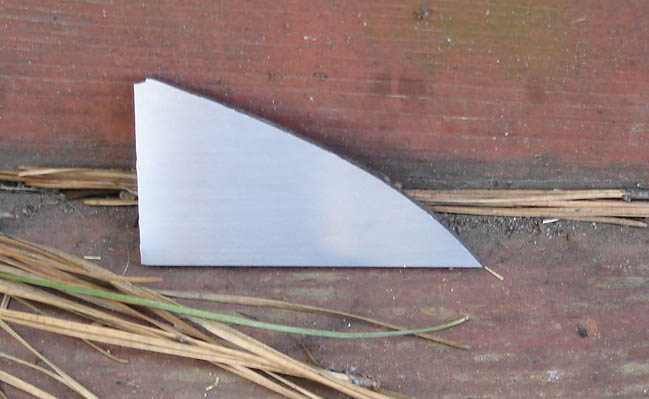
Taking all this into account I decided to so some experimenting of my own. I planned to use this material for the body of the plane in it's annealed state so I placed a scrap of the 410 stainless on the front steps of my shop and left it for 4 weeks. I prepped this piece by lapping the two flat sides on 220 grit sandpaper and left the edges rough. During this period of time it rained on several occasions, the temperature range from 14 to 60 degrees during this period so condensation formed on the piece and in a couple of instances ice formed on the piece overnight. Below is the picture I took when the piece was first placed on the step.


I performed an inspection of the porch step sample today. It looks just as it did the first day I put it out on the steps, even the rough edges showed no signs of corrosion. Of course I wouldn't suggest that anyone store their stainless bodied planes on the outside steps of their shop especially considering that the high carbon blade would certainly rust. Below is a picture of the sample after 4 weeks outdoor exposure.


The other consideration is that 400 Series stainless is magnetic which increases the ease of work holding and anyone one that has done much machine work knows that work holding is paramount to good machine work. All these factors lead me to believe that the 400 Series alloys may be the most ideal alloy for plane making.

On a lighter note....I've been working to complete some planes in time to ship them off in time for the Christmas holidays. A pair of rosewood infill "J" planes were the first to leave.


Holiday Traditions

For as long as I can remember, well maybe not that long, but it seems as long as we've had children one of the holiday decorations that we've used in our house at Christmas has been a little train of letters that spells the word "Noel". Children have great imaginations and one day when I looked over at the little train it did not spell "Noel". See picture below.


Maybe you had to be there, but I about spit out my coffee laughing when I saw this. I've always told my children to never let a good education go to waste, I guess this is the result.

Merry Christmas

Ron